
Resources
Dryland training and coaching insights.
Thousands of swim coaches read the free monthly newsletter: dryland training, performance science, club development and session ideas you can use tomorrow.
Dryland and coach education for swim teams
White paper
Dryland training for youth swimmers: the XERAswim approach.
Mission
To instil a culture of daily physical preparation that develops swimming athletes who understand the wisdom of their bodies and can solve movement problems.
Objective
Physical limitations are eliminated and the swimmer is ready, technically, tactically, physically and psychologically, to compete and win.
Guiding principles
- Dynamic postural alignment and balance are the foundation for all training
- Train movements, not muscles
- Train fundamental movement skills before sport-specific skills
- Train postural (core) strength before extremity strength
- Train body weight before external resistance
- Train joint integrity before joint mobility
- Train strength before strength endurance
- Train power before power endurance
- Train speed before speed endurance
How we think about movement
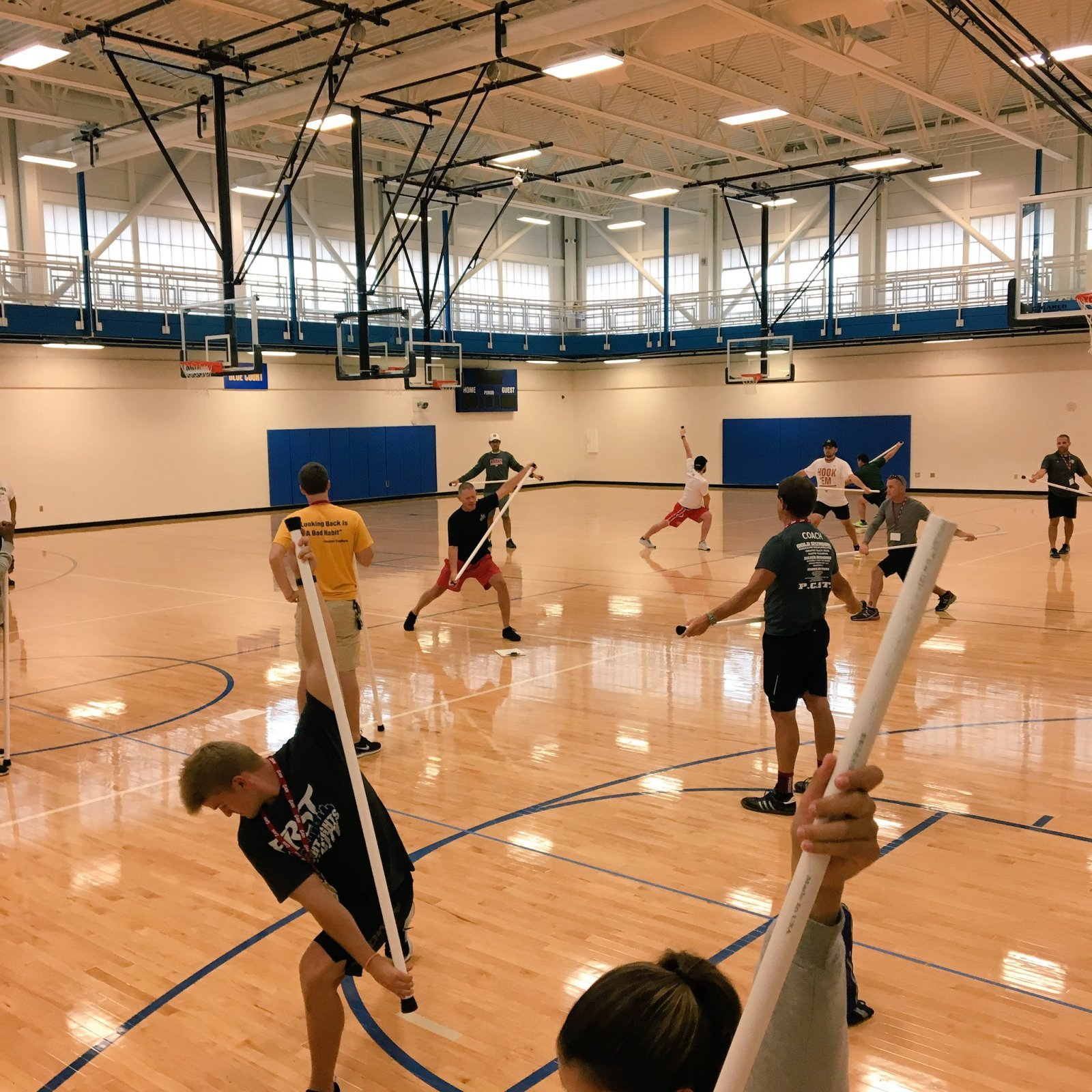
Connect toenails to fingernails, with the core as the centre of the action. Link the shoulder to the hip to hold water more effectively. Exercise execution matters as much as exercise choice: done badly, an exercise does little for swimming and raises injury risk.
Core volume rises quickly and holds high through the taper. The highest volume of leg work comes before the highest volume of kicking; the highest volume of upper-body work comes before the highest volume of swimming. What a swimmer does today follows from the last session and links to the next.
Nothing is guesswork
Before a single rep is written, we assess what a program has to work with: space, staff, equipment and budget, the time the club will give up and when, the age and group sizes, and the athletes’ movement literacy. Can they squat, lunge, push, pull, brace, bend and rotate? We also look at injury history and the staff’s readiness for change.
Why dryland and swimming work together
Both programs have to point at the same outcome in the water. Dryland is never allowed to take on a life of its own. The idea underneath it all is super-compensation: stress the body, let it recover, and time the next stimulus to land in the window where it rebounds above baseline, on land and in the water.
Try it this week
Sample session: 10 & Under, 10-minute dryland.
For the youngest swimmers, dryland is about movement, not strength: body weight, fundamental movement skills and postural control, kept short, playful and coach-led. You’ll need skipping ropes, mats or a soft surface for the tuck backs, and space to move.
Round 1
- Jump rope x 25
- Straight arm clapping jacks x 10
- Hip to heel squat x 5
- Chest touch push up x 5
- Forward lunge knee touch x 2 L/R
- Sit up and reach to sky x 8
- Rocking in tuck x 5
Round 2
- Jump rope x 25
- Straight arm clapping jills x 10
- Hip to heel squat w/ 180 pivot x 5
- Chest touch push up spiders x 5
- Reverse knee touch lunge x 2 L/R
- Tuck and extension x 8
- Rock back toe touches x 5
Round 3
- Jump rope x 25
- Skipping foot grab and reach to sky
- Hip to heel squat w/ 360 pivot x 5
- Chest touch push up frogs x 5
- Forward lunge to reverse lunge x 2 L/R
- Slow bicycle x 8
- Rock back to frog x 5
Want the full system for your club? Phases, exercise library and age-group guidance are built into Total Team Consulting.